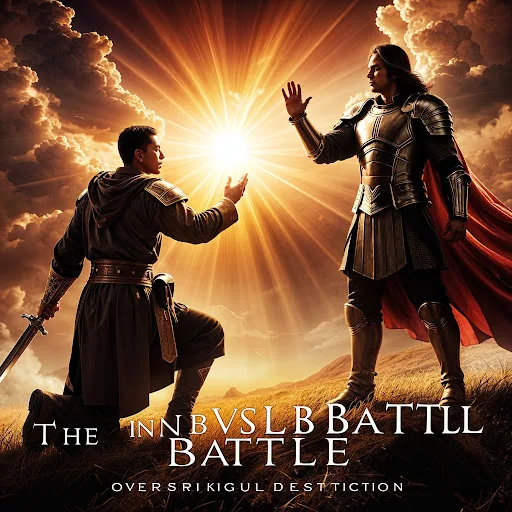
The Invisible Battle: Overcoming Spiritual Destruction

Life can often feel like a battlefield, with various struggles and challenges arising unexpectedly. Among these battles, there lies an invisible struggle that can wreak havoc on our spiritual well-being—unresolved inner conflicts. This battle occurs deep within the psyche, rooted in negative beliefs, emotional turmoil, and spiritual disconnection, ultimately affecting our overall quality of life.

#### Identifying the Invisible Battle

The invisible battle that many people face is often characterized by feelings of inadequacy, self-doubt, and fear. These emotions can stem from past traumas, societal pressures, or unrealistic expectations we set for ourselves. When left unaddressed, these underlying issues can manifest as anxiety, depression, or a sense of purposelessness, leading to a spiritual crisis.

Spirituality often includes our sense of connection to something greater than ourselves—be it a higher power, nature, or community. When inner battles overshadow this connection, we can feel isolated, lost, and devoid of hope. The disconnection is subtle but profound, creating a cycle where the struggle further distances us from the very things that promote healing and growth.

#### The Consequences of Spiritual Battles

When these invisible battles go unresolved, they can have far-reaching effects on various aspects of life, including relationships, career paths, and personal fulfillment. For instance, persistent feelings of unworthiness might hinder professional advancement due to the fear of taking risks. Likewise, these battles can strain personal relationships, as unresolved emotions may lead to withdrawal or conflict.

Furthermore, the emotional weight from this spiritual battle can impact physical health, leading to stress-related illnesses and fatigue. The balance of mind, body, and spirit is crucial for overall well-being, and ignoring this inner battle can disrupt that harmony.

#### Uncovering the Path to Healing

1. **Self-Awareness:** The first step in fighting this invisible battle is developing self-awareness. Take time to reflect on your feelings and identify triggers that bring forth negative emotions. Journaling can be an effective tool to express and articulate your thoughts.

2. **Mindfulness and Meditation:** Practicing mindfulness helps anchor you in the present moment, reducing the impact of anxiety and negative thoughts. Meditation can be particularly powerful in reconnecting with your spiritual self, promoting peace, clarity, and understanding.

3. **Seeking Professional Help:** Sometimes, the guidance of a counselor or therapist can provide the necessary tools to navigate these complex feelings. Professionals can offer insights into your situation, helping you understand the roots of your struggles and developing strategies for healing.

4. **Spiritual Practices:** Engaging in spiritual practices that resonate with you can cultivate a sense of connection and purpose. This might include prayer, affirmations, yoga, or spending time in nature.

5. **Community Support:** Reaching out to a supportive community can also provide comfort. Whether through friends, family, or spiritual groups, sharing your experiences can promote healing. Understanding that you're not alone in this battle can be immensely empowering.

6. **Setting Realistic Goals:** Finally, be kind to yourself. Set manageable goals that allow for gradual progress. Celebrate small victories as you confront and transform the negative beliefs that hinder your spiritual growth.

### Conclusion

Confronting the invisible battle that threatens your spiritual life is a courageous endeavor. By committing to self-reflection, utilizing supportive practices and communities, and engaging with professional help, you can reclaim control over your spiritual journey. As you navigate this path, remember—every small step forward is a victory in restoring balance and peace within. Embrace the journey towards healing and watch how it enriches every aspect of your life.

If you find this article useful, please comment, subscribe, like, and share with friends. If you're interested in joining our brotherhood, note that while form registration is free only, our professional spiritual materials for initiation require payment.

We offer an inspiring atmosphere with resources for the spirit, body, soul, and mind.

You can connect with us through the following channels:

Call USA: +13157504880

Call Nigeria: +2348067204187

Telegram Message: 
https://t.me/+2348067204187

Google chat: blackhearttemple@gmail.com

Email: blackhearttemple@gmail.com

Website: https://blackheartbrotherhood.blogspot.com/

Join Our Telegram Group: https://t.me/blackheartbrotherhood

Join Our Telegram Channel: https://t.me/occultbrotherhood4money

We look forward to hearing from you!

Comments

Popular posts from this blog

The Real Story of Lilith — The First Witch and Rebel of Creation

Lilith. The name conjures images of powerful, independent women, often associated with darkness, seduction, and a rebellious spirit. She’s a figure shrouded in myth and legend, a character steeped in folklore and spiritual interpretation. But who was Lilith? Far from a simple archetype, Lilith’s story is a complex tapestry woven from ancient Near Eastern mythology, Jewish folklore, and later interpretations within occult and feminist movements. This article delves beyond the sensationalized narratives to explore the multifaceted origins and enduring significance of Lilith, uncovering the real story of the first woman, the rebel of creation, and the symbol of female empowerment she represents. Origins in Ancient Near Eastern Mythology The earliest mentions of Lilith appear not in Jewish texts, but in ancient Near Eastern mythology, predating the Hebrew Bible. Her origins are closely linked to Sumerian and Akkadian traditions. In these early narratives, Lilith is depicted as ...

Why Ancient Africans Practiced Star Magic Before Astrology Existed

Long before the concepts of astrology as we know them today emerged, ancient African civilizations were deeply engaged in practices that revolved around the stars and celestial bodies, commonly referred to as star magic. This intricate system of knowledge was not merely a means of predicting the future or understanding personal traits; it was an essential aspect of cultural identity, spirituality, and daily life. Rooted in rich historical contexts and oral traditions, star magic encompassed rituals, beliefs, and a profound reverence for the night sky, reflecting the natural world's influence on human existence. By exploring the significance of star magic in ancient Africa, we can uncover its unique characteristics, its divergence from contemporary astrology, and its lasting impact on modern spiritual practices across the continent. The Historical Context of Ancient African Civilizations   The Rise of Early African Kingdoms   Ancient Africa was a tapestry ...

Understanding Satan's Knowledge and Presence

Satan, often characterized as the ultimate adversary in religious texts, raises intriguing questions about his capacity for knowledge and presence. Many wonder: does Satan know all humans by name and details? Additionally, can he be in multiple places simultaneously? These questions delve deep into theological and philosophical discussions about the nature of evil and the capabilities attributed to this figure. #### Does Satan Know All Humans? First, let’s consider the question of knowledge. Many religious traditions suggest that Satan is not omniscient, meaning he does not know everything. Unlike God, who is often described as all-knowing, Satan operates within the limitations of a being who lacks divine attributes. This implies that he does not know all humans by name or personal details. Instead, Satan is depicted as being highly observant and shrewd. He studies human behavior, discerning their weaknesses and tendencies, which allows him to manipulate situations to his a...

How Pagan Temples Used Music to Control Human Emotion

For centuries, Pagan temples have been revered as sacred spaces where devotees connect with the divine, seek spiritual guidance, and transcend the mundane. While most people associate these ancient sanctuaries with ritualistic ceremonies and symbolic expressions of faith, they also employed a powerful tool to influence human emotion: music. In this article, we'll delve into the history and practices of Pagan temples, exploring how music was used as a means to evoke, manipulate, and ultimately control human emotions. The Power of Sound in Ancient Cults In many ancient cultures, sound was considered a divine force capable of shaping reality. Pagans believed that sound waves held sacred properties, allowing them to tap into the fundamental forces of nature and access higher states of consciousness. Pagan temples were designed to harness this energy, incorporating specific acoustic principles to maximize the impact of sound on the human psyche. One of the most influential P...

Understanding the Misconceptions of Human Sacrifice Surrounding the Blackheart Brotherhood

In recent years, there has been a surge of interest in various secret societies and spiritual organizations, with the Blackheart Brotherhood often at the center of sensational rumors and misinformation. One of the most alarming claims circulating around the organization is that it requires human sacrifice as a condition for membership. This article aims to clarify these misconceptions and shed light on the Brotherhood's actual practices. The notion of human sacrifice has long been a sensationalized topic in discussions about occult societies. Movies, literature, and news stories have often portrayed such practices as integral to the operations of secret groups. However, when it comes to the Blackheart Brotherhood, these claims are unfounded and misleading. The leadership of the organization has consistently stated that it does not engage in, endorse, or allow any form of human sacrifice.  The values embraced by the Blackheart Brotherhood emphasize respect for life, pers...

The Kabbalistic Tree of Life Explained Like Never Before

The Kabbalistic Tree of Life is one of the most profound and intricate symbols in Jewish mysticism, often serving as a visual representation of the cosmos and the human soul. This article delves into the depths of this mystical symbol, offering an engaging and comprehensive exploration of its components, significance, and the wisdom it imparts. ### Introduction The Tree of Life, or "Etz Chaim" in Hebrew, is a central emblem in Kabbalah, the esoteric tradition within Judaism. It is a diagram that consists of ten interconnected spheres, known as Sephirot, arranged in a pattern resembling a tree. This symbol is not just an artistic representation but a profound philosophical and spiritual map that guides the understanding of the universe and the human experience. ### The Structure of the Tree of Life #### The Sephirot At the heart of the Tree of Life are the ten Sephirot, each representing a different aspect of divine consciousness and human potential. These spheres ...

The Lost Grimoire of Solomon — Truth or Legend?

The Lost Grimoire of Solomon is a mysterious and intriguing topic that has captivated the imagination of people for centuries. Also known as the "Key of Solomon," this ancient tome is said to hold the secrets of magic and spiritual power, attributed to King Solomon, one of the most revered figures in Jewish history. But is the Lost Grimoire of Solomon a genuine historical artifact, or a product of medieval legend? In this article, we'll delve into the history, mythology, and controversies surrounding this enigmatic text. The Origins of the Lost Grimoire of Solomon The story of the Lost Grimoire of Solomon dates back to the 12th century, when a manuscript attributed to the king was discovered in a monastery in Cordoba, Spain. The text, known as the "Liber Salomonis," or "The Book of Solomon," purportedly contained magical spells, incantations, and rituals for summoning and binding spirits. The book was said to have been written by King Solom...