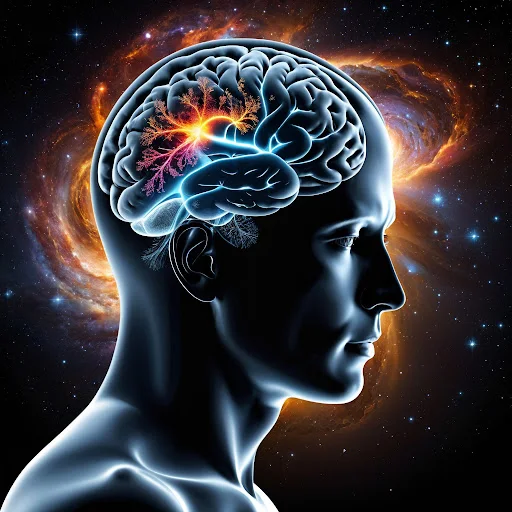
The Intriguing Connection Between the Brain and the Soul

The interplay between the brain and the soul has intrigued philosophers, theologians, and neuroscientists for centuries. While the brain is the physical organ responsible for our thoughts, emotions, and actions, the concept of the soul often pertains to the essence of our identity, our consciousness, and our connection to something greater than ourselves. Understanding how these two elements interact can offer profound insights into the nature of human existence.

At the core of this discussion is the question: What exactly is the soul? Various cultures and belief systems define the soul in different ways. In many philosophies, it represents the intangible aspects of a person, encompassing consciousness, morality, and individuality. The brain, however, is a tangible, biological structure that processes information, controls bodily functions, and facilitates our interactions with the world.

One might ask, how does an organ made of neurons and synapses give rise to the complexities associated with the soul? Neuroscience has made significant strides in understanding how the brain functions. For example, when we experience love, compassion, or even existential dread, different areas of the brain light up, releasing neurotransmitters that shape our feelings. The limbic system, often referred to as the emotional brain, plays a crucial role in processing emotions, while the prefrontal cortex is key in decision-making and self-reflection. This suggests that while the brain may manage our emotional and cognitive experiences, the essence of our being—the soul—could be seen as the lens through which we interpret those experiences.

Furthermore, the mind-body connection cannot be overlooked. It's becoming increasingly evident that mental states can influence physical health. Practices such as meditation, prayer, and mindfulness have shown to alter brain structure and function, promoting neural plasticity—an indication that the mind and body (or brain) work symbiotically. This interaction hints at a deeper connection between our physical existence and the more ethereal notion of the soul.

Philosophers from Plato to Descartes have posited varying views on the relationship between the brain and the soul. Descartes famously articulated the dualism theory, proposing that the mind (or soul) and body are distinct yet interact with one another. This perspective raises the question of how non-material consciousness could influence a material brain. While modern science may not fully resolve this conundrum, emerging fields such as neurotheology are attempting to explore how spiritual experiences correlate with brain activity. Neurotheology investigates the neurological underpinnings of spiritual experiences, supporting the idea that the brain can facilitate experiences often attributed to the soul or spirit.

Reflecting on personal experiences can deepen our understanding of this connection. Moments of introspection, creativity, or profound emotional connection may evoke a feeling of the soul being engaged or awakened. These experiences often lead us to contemplate our purpose, ethics, and our place in the universe—questions that connect deeply to the soul.

In conclusion, while the brain is a complex organ that governs our cognitive and emotional functions, the essence of who we are—our soul—remains a mystery. The relationship between the two is undoubtedly intricate, highlighting the importance of both scientific exploration and personal reflection. Whether through the lens of neuroscience, philosophy, or spirituality, the quest to understand the connection between the brain and the soul invites us to explore the depths of our humanity and the essence of what it means to be alive.

If you find this article useful, please comment, subscribe, like, and share with friends. If you're interested in joining our brotherhood, note that while form registration is free only, our professional spiritual materials for initiation require payment.

We offer an inspiring atmosphere with resources for the spirit, body, soul, and mind.

You can connect with us through the following channels:

Call USA: +13157504880

Call Nigeria: +2348067204187

Telegram Message: 
https://t.me/+2348067204187

Google chat: blackhearttemple@gmail.com

Email: blackhearttemple@gmail.com

Website: https://blackheartbrotherhood.blogspot.com/

Join Our Telegram Group: https://t.me/blackheartbrotherhood

Join Our Telegram Channel: https://t.me/occultbrotherhood4money

We look forward to hearing from you!

Comments

Popular posts from this blog

The Real Story of Lilith — The First Witch and Rebel of Creation

Lilith. The name conjures images of powerful, independent women, often associated with darkness, seduction, and a rebellious spirit. She’s a figure shrouded in myth and legend, a character steeped in folklore and spiritual interpretation. But who was Lilith? Far from a simple archetype, Lilith’s story is a complex tapestry woven from ancient Near Eastern mythology, Jewish folklore, and later interpretations within occult and feminist movements. This article delves beyond the sensationalized narratives to explore the multifaceted origins and enduring significance of Lilith, uncovering the real story of the first woman, the rebel of creation, and the symbol of female empowerment she represents. Origins in Ancient Near Eastern Mythology The earliest mentions of Lilith appear not in Jewish texts, but in ancient Near Eastern mythology, predating the Hebrew Bible. Her origins are closely linked to Sumerian and Akkadian traditions. In these early narratives, Lilith is depicted as ...

Why Ancient Africans Practiced Star Magic Before Astrology Existed

Long before the concepts of astrology as we know them today emerged, ancient African civilizations were deeply engaged in practices that revolved around the stars and celestial bodies, commonly referred to as star magic. This intricate system of knowledge was not merely a means of predicting the future or understanding personal traits; it was an essential aspect of cultural identity, spirituality, and daily life. Rooted in rich historical contexts and oral traditions, star magic encompassed rituals, beliefs, and a profound reverence for the night sky, reflecting the natural world's influence on human existence. By exploring the significance of star magic in ancient Africa, we can uncover its unique characteristics, its divergence from contemporary astrology, and its lasting impact on modern spiritual practices across the continent. The Historical Context of Ancient African Civilizations   The Rise of Early African Kingdoms   Ancient Africa was a tapestry ...

Understanding Satan's Knowledge and Presence

Satan, often characterized as the ultimate adversary in religious texts, raises intriguing questions about his capacity for knowledge and presence. Many wonder: does Satan know all humans by name and details? Additionally, can he be in multiple places simultaneously? These questions delve deep into theological and philosophical discussions about the nature of evil and the capabilities attributed to this figure. #### Does Satan Know All Humans? First, let’s consider the question of knowledge. Many religious traditions suggest that Satan is not omniscient, meaning he does not know everything. Unlike God, who is often described as all-knowing, Satan operates within the limitations of a being who lacks divine attributes. This implies that he does not know all humans by name or personal details. Instead, Satan is depicted as being highly observant and shrewd. He studies human behavior, discerning their weaknesses and tendencies, which allows him to manipulate situations to his a...

How Pagan Temples Used Music to Control Human Emotion

For centuries, Pagan temples have been revered as sacred spaces where devotees connect with the divine, seek spiritual guidance, and transcend the mundane. While most people associate these ancient sanctuaries with ritualistic ceremonies and symbolic expressions of faith, they also employed a powerful tool to influence human emotion: music. In this article, we'll delve into the history and practices of Pagan temples, exploring how music was used as a means to evoke, manipulate, and ultimately control human emotions. The Power of Sound in Ancient Cults In many ancient cultures, sound was considered a divine force capable of shaping reality. Pagans believed that sound waves held sacred properties, allowing them to tap into the fundamental forces of nature and access higher states of consciousness. Pagan temples were designed to harness this energy, incorporating specific acoustic principles to maximize the impact of sound on the human psyche. One of the most influential P...

Understanding the Misconceptions of Human Sacrifice Surrounding the Blackheart Brotherhood

In recent years, there has been a surge of interest in various secret societies and spiritual organizations, with the Blackheart Brotherhood often at the center of sensational rumors and misinformation. One of the most alarming claims circulating around the organization is that it requires human sacrifice as a condition for membership. This article aims to clarify these misconceptions and shed light on the Brotherhood's actual practices. The notion of human sacrifice has long been a sensationalized topic in discussions about occult societies. Movies, literature, and news stories have often portrayed such practices as integral to the operations of secret groups. However, when it comes to the Blackheart Brotherhood, these claims are unfounded and misleading. The leadership of the organization has consistently stated that it does not engage in, endorse, or allow any form of human sacrifice.  The values embraced by the Blackheart Brotherhood emphasize respect for life, pers...

The Kabbalistic Tree of Life Explained Like Never Before

The Kabbalistic Tree of Life is one of the most profound and intricate symbols in Jewish mysticism, often serving as a visual representation of the cosmos and the human soul. This article delves into the depths of this mystical symbol, offering an engaging and comprehensive exploration of its components, significance, and the wisdom it imparts. ### Introduction The Tree of Life, or "Etz Chaim" in Hebrew, is a central emblem in Kabbalah, the esoteric tradition within Judaism. It is a diagram that consists of ten interconnected spheres, known as Sephirot, arranged in a pattern resembling a tree. This symbol is not just an artistic representation but a profound philosophical and spiritual map that guides the understanding of the universe and the human experience. ### The Structure of the Tree of Life #### The Sephirot At the heart of the Tree of Life are the ten Sephirot, each representing a different aspect of divine consciousness and human potential. These spheres ...

The Lost Grimoire of Solomon — Truth or Legend?

The Lost Grimoire of Solomon is a mysterious and intriguing topic that has captivated the imagination of people for centuries. Also known as the "Key of Solomon," this ancient tome is said to hold the secrets of magic and spiritual power, attributed to King Solomon, one of the most revered figures in Jewish history. But is the Lost Grimoire of Solomon a genuine historical artifact, or a product of medieval legend? In this article, we'll delve into the history, mythology, and controversies surrounding this enigmatic text. The Origins of the Lost Grimoire of Solomon The story of the Lost Grimoire of Solomon dates back to the 12th century, when a manuscript attributed to the king was discovered in a monastery in Cordoba, Spain. The text, known as the "Liber Salomonis," or "The Book of Solomon," purportedly contained magical spells, incantations, and rituals for summoning and binding spirits. The book was said to have been written by King Solom...