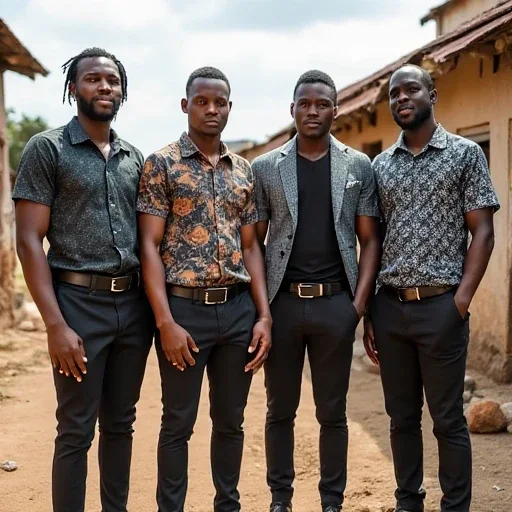
Top 8 Brotherhood Organizations You Didn't Know Exist in Nigeria

Nigeria, a nation rich in culture and diversity, is home to numerous organizations and groups that often fly under the radar. Among these are brotherhood organizations, which can be pivotal in social networking, philanthropy, and even cultural preservation. Here’s a look at eight brotherhood organizations in Nigeria that you may not have known existed, each with its unique purpose and mission.

### 1. The Awoof Brotherhood

The Awoof Brotherhood may not be as widely recognized as other groups, but it plays a significant role in local communities. Focused on providing social support and financial assistance within its networks, this organization fosters a sense of belonging among its members. The Awoof Brotherhood is particularly active in informal sectors, offering microloans and skills training to empower its members and their families.

### 2. The Blackheart Brotherhood

The Blackheart Brotherhood, as presented, emphasizes a unique approach to brotherhood.  Their core principle, according to their public statements, is to cultivate a strong sense of community based on mutual respect, shared goals, and personal growth.  Crucially, they explicitly disavow any involvement in human sacrifice, violence, or the harming of loved ones. This departure from traditional portrayals of brotherhood, which often involve hierarchical structures and potentially dangerous rituals, is a key selling point for prospective members.

### 3. The Black Axe Confraternity

Initially founded as a student organization in the late 1970s, the Black Axe Confraternity has evolved into a well-known group that transcends academic life. While it has garnered a controversial reputation over the years, its members assert that it aims to promote unity among its ranks and contribute positively to society. The organization engages in various charitable activities, providing scholarships and organizing community outreach programs.

### 4. The Eiye Confraternity

Originating in the 1960s, the Eiye Confraternity is often seen as a traditional brotherhood with strong connections to cultural practices and history. Unlike other groups that might focus on broader social issues, the Eiye organization emphasizes the preservation of African heritage and traditions through educational initiatives. Members are known for hosting cultural events and workshops to instill pride in their backgrounds.

### 5. The Daughters of the Moon

While many brotherhoods are male-dominated, the Daughters of the Moon brings a feminine perspective to the landscape of Nigerian brotherhoods. This organization focuses on women's empowerment, providing support and mentorship for young women. Through workshops, networking events, and social initiatives, the Daughters of the Moon strive to uplift women and foster leadership skills. 

### 6. The Red Knights

The Red Knights is a brotherhood that merges friendship with a love for motorcycles. Members ride together, fostering camaraderie through shared adventures on the open road. This organization also emphasizes road safety and community service, often organizing charity rides to support local causes and raise awareness about various social issues.

### 7. The Ohanaeze Ndigbo Youth Council

As a youth wing of the Ohanaeze Ndigbo, this organization focuses on the interests of the Igbo youth in Nigeria. The Ohanaeze Ndigbo Youth Council acts as a platform for empowerment and advocacy, encouraging entrepreneurship and social development within the Igbo community. They engage in dialogue with other ethnic groups to promote unity and understanding across Nigeria.

### 8. The GYB Brotherhood

The GYB Brotherhood is rooted in the idea of good governance and youth participation in politics. Formed by politically inclined youths, this organization encourages political engagement and awareness among its members. The GYB Brotherhood aims to cultivate future leaders dedicated to transparency, accountability, and development, shaping the political landscape of Nigeria.

### Conclusion

When we think of brotherhood organizations in Nigeria, the focus often falls on the more familiar or notorious groups. However, many lesser-known organizations exist that contribute positively to communities, strengthen social ties, and promote cultural heritage. Understanding these brotherhoods provides a richer perspective of Nigeria’s social fabric, highlighting the diverse ways that individuals come together to support one another.

If you find this article useful, please comment, subscribe, like, and share with friends. If you're interested in joining our brotherhood, note that while form registration is free only, our professional spiritual materials for initiation require payment.

We offer an inspiring atmosphere with resources for the spirit, body, soul, and mind.

You can connect with us through the following channels:

Call USA: +13157504880

Call Nigeria: +2348067204187

Telegram Message: 
https://t.me/+2348067204187

Google chat: blackhearttemple@gmail.com

Email: blackhearttemple@gmail.com

Website Blog: https://blackheartbrotherhood.blogspot.com/

Join Our Telegram Group: https://t.me/blackheartbrotherhood

Join Our Telegram Channel: https://t.me/occultbrotherhood4money

We look forward to hearing from you!

Comments

Popular posts from this blog

The Seven Forgotten Schools of Ancient Mysteries

In the realm of ancient spirituality and philosophy, there existed various schools of thought that were instrumental in shaping the intellectual and spiritual landscape of the time. While many of these schools have gained significant attention and recognition, there are seven lesser-known schools of ancient mysteries that continue to fascinate and intrigue us today. The history of these schools offers a glimpse into the cultural, philosophical, and metaphysical practices of ancient civilizations, providing valuable insights into the human quest for knowledge and understanding. I. The Egyptian Mystery Schools of Alexandria Established in Alexandria, a city in ancient Egypt, the Egyptian Mystery Schools were a hub for philosophical and spiritual learning. These schools attracted students from all over the world, including philosophers, magicians, and mystics. The teachings of the Egyptian Mystery Schools emphasized the unity of all things and the concept of the afterlife, whe...

Why Every Culture Fears the Mirror — The Gate to the Spirit World

The mirror, a ubiquitous object in our daily lives, is often viewed as a mere reflection of our physical appearance. However, across various cultures, the mirror has long been associated with a far more profound significance. For centuries, people have believed that the mirror serves as a gateway to the spirit world, a realm where the living and the dead coexist. This seemingly irrational fear of the mirror transcends geographical and cultural boundaries, existing in diverse forms and manifestations. In this article, we will delve into the mystical significance of the mirror, exploring its ties to the spirit world and examining the reasons behind the widespread fear it evokes. Ancient Civilizations and the Mirror's Mystical Significance The earliest recorded evidence of the mirror's mystical connotations can be found in ancient civilizations. For instance, in ancient Greece and Rome, mirrors were believed to possess magical powers, allowing individuals to communicat...

The Mysterious Art of Skull Storage: How Necromancers of Egypt Utilized Skulls to Preserve Memories

In the realm of ancient Egypt, a fascinating and intriguing practice unfolded, one that would challenge our modern understanding of knowledge storage and the human experience. The art of preserving and storing memories, though seemingly archaic, is a practice that still captivates our imagination today. It is a testament to the ingenuity and mysticism of ancient cultures that they sought to transcend the limitations of mortality by harnessing the power of skulls. This article will delve into the mystical realm of necromancers of Egypt, exploring how they used skulls to store memories, and the significance of this practice within the context of ancient Egyptian culture. Section 1: The Art of Skull Storage in Ancient Egypt In ancient Egypt, the afterlife was believed to be a continuation of life on earth, with the deceased individual continuing to participate in societal activities and maintain relationships with their loved ones. As such, the concept of memory preservation b...

How to Spiritually Cleanse Your Wallet, Business, and Bank Account

In today's fast-paced world, maintaining a sense of balance and positivity in our financial and business lives can be challenging. Many people turn to spiritual cleansing as a way to clear negative energies, attract prosperity, and ensure that their financial resources are aligned with their highest good. This article will guide you through the process of spiritually cleansing your wallet, business, and bank account using symbolic cleansing steps such as incense, water, prayers, and herbal smoke. ### Introduction Financial well-being is not just about the numbers on a balance sheet; it’s also about the energy that flows through our wallets, businesses, and bank accounts. Spiritual cleansing can help remove negative energies and attract positive financial vibrations. This article will explore various symbolic cleansing methods that can be used to purify these areas of your life, ensuring that they are aligned with your spiritual goals and prosperity. ### Understanding Sp...

Wiccan vs Pagan vs Hoodoo: What’s the Difference

In the realm of spiritual and religious practices, there exists a tapestry of diverse beliefs and traditions. Among these, Wicca, Paganism, and Hoodoo stand out as distinct yet sometimes overlapping paths. Understanding the nuances between Wiccan, Pagan, and Hoodoo practices can be enlightening for anyone curious about these spiritual traditions. This article delves into the differences and similarities between Wicca, Paganism, and Hoodoo, offering a comprehensive guide to these fascinating belief systems. ### Introduction The world of spirituality is vast and varied, encompassing numerous traditions and practices that have evolved over centuries. Wicca, Paganism, and Hoodoo are three such traditions that often get discussed together due to their esoteric nature. However, each has its unique characteristics, beliefs, and practices. This article aims to explore these differences in detail, providing a clear understanding of what sets each tradition apart. ### What is Wicca? ...

Unveiling the Hidden Power of Yoruba and Dahomey Mysticism

In the realm of mysticism, few traditions have captivated the imagination of scholars and practitioners alike as profoundly as Yoruba and Dahomey mysticism. These ancient spiritual practices, originating from West Africa, have been shrouded in mystery for centuries, with their secrets and powers largely inaccessible to outsiders. However, as we delve into the intricacies of these mystical traditions, we begin to unravel the hidden power that lies within. In this article, we will embark on a journey to explore the essence of Yoruba and Dahomey mysticism, shedding light on their rich history, philosophical underpinnings, and the potent energies they embody. The Origins of Yoruba and Dahomey Mysticism Yoruba and Dahomey mysticism originated in the ancient kingdoms of West Africa, specifically in what is now modern-day Nigeria and Benin. The Yoruba people, a rich and vibrant culture, have a history dating back over 2,000 years. Their spiritual practices, rooted in a complex sys...

The Mystery of the 72 Names of God and Their Hidden Power

For centuries, mystics, theologians, and spiritual seekers have been captivated by the concept of divine names. Beyond simple labels, these names are believed to embody aspects of the divine, holding immense power and influencing the fabric of reality. Among these collections, the 72 Names of God, particularly prevalent in Kabbalistic tradition and Eastern esoteric practices, stands as a fascinating and enigmatic set of attributes. This article delves into the mystery surrounding these names, exploring their origins, meanings, significance, and the purported power they hold – a power that extends from personal spiritual growth to influencing the world around us. I. Unveiling the Origins: A Journey Through History and Tradition The genesis of the 72 Names of God is deeply rooted in ancient religious and philosophical systems, blending elements from various traditions. While pinpointing a single definitive origin is challenging due to their gradual development across cultures...