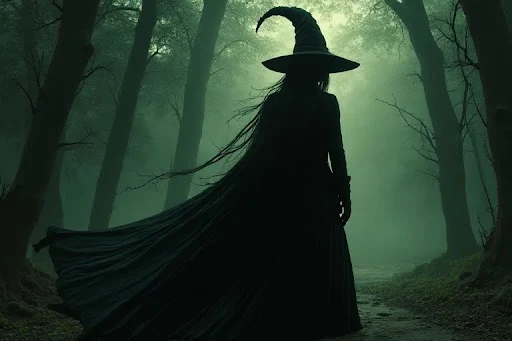
The Enigmatic Allure of Witchcraft in Modern Times


Witchcraft, often shrouded in mystery and folklore, has captivated human imagination for centuries. As we navigate the complexities of the modern world, one might wonder if belief in witchcraft still holds significance. Is witchcraft real? And why do people cling to such beliefs in an age dominated by science and rationality?

While definitive evidence of witchcraft as a supernatural force may elude us, its cultural and psychological impact is undeniably real. From ancient times through the Renaissance and into the present, witchcraft has been woven into the fabric of societies. The idea of individuals possessing supernatural powers or knowledge has long served as a lens through which communities understand the unexplainable aspects of life. Diseases, misfortunes, and even natural disasters were often attributed to the malevolent actions of witches, giving rise to witch hunts and trials throughout history.

Modern society, however, is characterized by scientific inquiry and empirical reasoning. So why, then, do people continue to believe in witchcraft? The answer lies in the complex interplay between tradition, personal experience, and a desire for empowerment.

For many, witchcraft offers a connection to the earth, nature, and the feminine. In an era where industrialization and technology often distance individuals from these primal roots, the practice of witchcraft can serve as a form of rebellion against the mechanization of society. It provides a way to reconnect with the cycles of nature, honoring seasonal changes through rituals and symbols.

Moreover, witchcraft appeals to those seeking agency in their lives. In a world where external forces often dictate outcomes, embracing witchcraft rituals can be empowering. Practitioners—often called witches—invoke spells or perform rituals not solely to manipulate the environment for their benefit, but as a form of self-expression and control. This reclamation of personal power is particularly appealing in today's climate, which frequently feels chaotic and uncertain.

The rise of social movements advocating for marginalized communities has also contributed to a revival of interest in witchcraft. Historically, many witches were women who defied societal norms. This association continues to resonate today, as individuals reclaim the label of “witch” as a symbol of feminism, independence, and defiance against patriarchal systems. In contemporary contexts, witchcraft can be seen as a form of spiritual empowerment, helping individuals navigate issues such as mental health, social justice, and personal growth.

The internet has further fueled this fascination. Online spaces provide platforms for the sharing of knowledge, experiences, and community among practitioners. Resources like blogs, podcasts, and social media groups have created supportive networks where individuals can explore witchcraft with others, facilitating a sense of belonging and shared purpose. As a result, witchcraft has evolved from a marginalized practice into a vibrant and diverse community.

In conclusion, while the manifestations of witchcraft may not conform to traditional scientific understanding, their relevance persists in the modern world. For many, believing in witchcraft offers a bridge between the past and the present, a means of empowerment, and a way to seek connection amidst the chaos of contemporary life. Whether viewed as a spiritual practice, a cultural movement, or a personal journey, witchcraft remains a potent symbol of human resilience and creativity, inviting individuals to explore the depths of their own power in this ever-changing world.

If you find this article useful, please comment, subscribe, like, and share with friends. If you're interested in joining our brotherhood, note that while the registration form is free, our professional spiritual materials for initiation require payment.

We offer an inspiring atmosphere with resources for the spirit, body, soul, and mind.

You can connect with us through the following channels:

Call USA: +13157504880

Call Nigeria: +2348067204187

Telegram Message: 
https://t.me/+2348067204187

WhatsApp us: https://wa.me/2348067204187

Google chat: blackhearttemple@gmail.com

Email: blackhearttemple@gmail.com

Website Blog: https://blackheartbrotherhood.blogspot.com/

Join Our Telegram Group: https://t.me/blackheartbrotherhood

Join Our Telegram Channel: https://t.me/occultbrotherhood4money

We look forward to hearing from you!

Comments

Popular posts from this blog

Try This 3-Day Spiritual Salt Cleansing Challenge and Watch What Happens

Ever feel like your energy is stuck in mud? That heavy vibe after a tough week or endless meetings? In our busy lives, negative energy builds up fast. It clings to your aura like dust on a window. A spiritual salt cleanse offers a quick reset. This 3-day challenge uses simple salt to clear blockages and boost your vibe. You'll notice clearer thoughts and more pep in just 72 hours. Ready to ditch the psychic residue? Let's dive in. Understanding Energetic Buildup and the Power of Salt What is Spiritual Debris and How Does It Accumulate? Negative energy sneaks in from all sides. Think about rushing through crowded streets or arguing with a friend. Stress at work adds to it too. These moments leave behind what experts call spiritual debris. It sticks around, causing mental fog or that draggy feeling. You might not see it, but your body feels the weight. Over time, this buildup blocks your natural flow. Simple things like a bad news feed or toxic chats pile it on. No wo...

The Mysterious Art of Skull Storage: How Necromancers of Egypt Utilized Skulls to Preserve Memories

In the realm of ancient Egypt, a fascinating and intriguing practice unfolded, one that would challenge our modern understanding of knowledge storage and the human experience. The art of preserving and storing memories, though seemingly archaic, is a practice that still captivates our imagination today. It is a testament to the ingenuity and mysticism of ancient cultures that they sought to transcend the limitations of mortality by harnessing the power of skulls. This article will delve into the mystical realm of necromancers of Egypt, exploring how they used skulls to store memories, and the significance of this practice within the context of ancient Egyptian culture. Section 1: The Art of Skull Storage in Ancient Egypt In ancient Egypt, the afterlife was believed to be a continuation of life on earth, with the deceased individual continuing to participate in societal activities and maintain relationships with their loved ones. As such, the concept of memory preservation b...

The Mysterious World of Poltergeists: Uncovering the Truth Behind Haunted Homes

For centuries, people have been fascinated by the concept of poltergeists, a type of paranormal entity believed to be responsible for physical disturbances and unexplained events in a particular location. From slamming doors and objects moving on their own to disembodied voices and unexplained noises, poltergeist activity can be both terrifying and intriguing. In this article, we'll delve into the world of poltergeists, exploring their history, characteristics, and the science behind these mysterious entities. What is a Poltergeist? A poltergeist is a type of paranormal entity believed to be responsible for physical disturbances and unexplained events in a particular location. The term "poltergeist" comes from the German words "poltern," meaning "to rumble or bang," and "geist," meaning "spirit" or "ghost." Poltergeists are often associated with a specific location, such as a house or building, and are believed...

The Seven Forgotten Schools of Ancient Mysteries

In the realm of ancient spirituality and philosophy, there existed various schools of thought that were instrumental in shaping the intellectual and spiritual landscape of the time. While many of these schools have gained significant attention and recognition, there are seven lesser-known schools of ancient mysteries that continue to fascinate and intrigue us today. The history of these schools offers a glimpse into the cultural, philosophical, and metaphysical practices of ancient civilizations, providing valuable insights into the human quest for knowledge and understanding. I. The Egyptian Mystery Schools of Alexandria Established in Alexandria, a city in ancient Egypt, the Egyptian Mystery Schools were a hub for philosophical and spiritual learning. These schools attracted students from all over the world, including philosophers, magicians, and mystics. The teachings of the Egyptian Mystery Schools emphasized the unity of all things and the concept of the afterlife, whe...

The Mystery of the 72 Names of God and Their Hidden Power

For centuries, mystics, theologians, and spiritual seekers have been captivated by the concept of divine names. Beyond simple labels, these names are believed to embody aspects of the divine, holding immense power and influencing the fabric of reality. Among these collections, the 72 Names of God, particularly prevalent in Kabbalistic tradition and Eastern esoteric practices, stands as a fascinating and enigmatic set of attributes. This article delves into the mystery surrounding these names, exploring their origins, meanings, significance, and the purported power they hold – a power that extends from personal spiritual growth to influencing the world around us. I. Unveiling the Origins: A Journey Through History and Tradition The genesis of the 72 Names of God is deeply rooted in ancient religious and philosophical systems, blending elements from various traditions. While pinpointing a single definitive origin is challenging due to their gradual development across cultures...

Why Every Culture Fears the Mirror — The Gate to the Spirit World

The mirror, a ubiquitous object in our daily lives, is often viewed as a mere reflection of our physical appearance. However, across various cultures, the mirror has long been associated with a far more profound significance. For centuries, people have believed that the mirror serves as a gateway to the spirit world, a realm where the living and the dead coexist. This seemingly irrational fear of the mirror transcends geographical and cultural boundaries, existing in diverse forms and manifestations. In this article, we will delve into the mystical significance of the mirror, exploring its ties to the spirit world and examining the reasons behind the widespread fear it evokes. Ancient Civilizations and the Mirror's Mystical Significance The earliest recorded evidence of the mirror's mystical connotations can be found in ancient civilizations. For instance, in ancient Greece and Rome, mirrors were believed to possess magical powers, allowing individuals to communicat...

Why Ancient Africans Practiced Star Magic Before Astrology Existed

Long before the concepts of astrology as we know them today emerged, ancient African civilizations were deeply engaged in practices that revolved around the stars and celestial bodies, commonly referred to as star magic. This intricate system of knowledge was not merely a means of predicting the future or understanding personal traits; it was an essential aspect of cultural identity, spirituality, and daily life. Rooted in rich historical contexts and oral traditions, star magic encompassed rituals, beliefs, and a profound reverence for the night sky, reflecting the natural world's influence on human existence. By exploring the significance of star magic in ancient Africa, we can uncover its unique characteristics, its divergence from contemporary astrology, and its lasting impact on modern spiritual practices across the continent. The Historical Context of Ancient African Civilizations   The Rise of Early African Kingdoms   Ancient Africa was a tapestry ...